
2026-01-02
Controlling the temperature is one of the most vital aspects in preserving the quality, safety, and usability of perishable and sensitive products. In all industries (food, pharmaceuticals, dairy, etc.), any slight fluctuation of the stored products or transported products can result in spoilage, regulatory violations, and money losses for these industries. In addition, as organisations continue to increase speed to market and decentralise their operations, industry leaders require cooling solutions that are dependable and do not require constant electricity.
The purpose of a chiller box is to fulfill the need for portable insulated container storage that can hold food products at stable internal temperatures for set periods of time. They are often used in situations where standard powered refrigeration is either not available, impractical, or cannot be operated effectively. The effectiveness of a chiller box will be primarily dependent upon how precisely a chiller box has been selected for the specific application.
All types of real-world performance are affected by several factors, including size, insulation quality, material characteristics, colour, and customizability. Without fully understanding these factors, companies have no way of knowing whether or not they're going to waste their resources on products that will either fail to deliver as promised or be rendered obsolete within a short time frame. In this guide, we will outline the basic concepts about chiller boxes and the way in which they’re utilized, as well as provide suggestions for selecting the right configuration to ensure reliable long-term use.
Chillers are designed to hold their contents at low temperatures without requiring an external power source. They are built to keep outside temperatures at bay so that the items inside stay cool for longer. Chillers provide a great solution for transporting items that need to be kept cool temporarily.
Chiller boxes provide a more controlled environment by using controlled-thickness insulation, tightly fitting lids, and durable outer shells, all of which contribute to the reduction of temperature fluctuation while handling and transporting goods.
Typically, Ice Packs, Gel Packs, and Pre-Chilled products inside the Chiller will keep the internal temperature at a desired level.
The key functional characteristics of Chiller Boxes are:
The use of chiller boxes extends across multiple industries where temperature stability directly affects product quality and compliance. While the core function remains the same, different sectors rely on different design priorities such as hygiene, portability, or load capacity.
Businesses in the food and beverage industry utilize chiller boxes for maintaining product freshness while in transport, as well as for outdoor use. Pharmaceutical and healthcare-related businesses utilize these chiller boxes for the proper storage of medications and diagnostic specimens during transportation, as well as for safe packaging and storage of medicines and diagnostic specimens. Companies that cater events and/or have limited access to permanent fridge units also utilize chiller boxes.
Businesses typically utilize refrigerators/ coolers for the purposes of:
The widespread utilization of these types of products has increased demand for customized friction heaters for commercial applications.
See Also: From Catch to Customer: How Ice Boxes & Fish Tubs Keep Seafood Fresh
Size selection is one of the most important decisions when businesses buy chiller boxes with customisation, yet it is often oversimplified. The size of a chiller box influences cooling efficiency, handling convenience, and transport logistics. A box that is too large may lose cooling efficiency if underfilled, while a box that is too small can slow operations.
Choosing the right size requires understanding average load volume, transport frequency, and how long contents need to remain chilled. Size should be viewed as an operational parameter, not just a capacity number. Businesses that scale often benefit from standardizing sizes across use cases.
Chiller box sizes are typically grouped as:
Read Also: Best Ice Boxes for Travel, Catering & Outdoor Events
Colour selection in chiller boxes serves both practical and branding purposes. While often treated as an aesthetic choice, colour plays an important role in identification, visibility, and operational organization. In busy or shared environments, colour coding can help distinguish contents, routes, or ownership.
Custom colours also support brand visibility, especially in customer-facing environments such as events or retail delivery points. Lighter colours may reduce heat absorption in outdoor conditions, while bold colours improve visibility and recognition.
Common colour and branding options include:
These features are particularly useful for customized chiller box design for events.
Learn More: Buying an Ice Box: A Complete Overview
Chiller box customisation enables these boxes to be designed based on actual operational conditions, as opposed to a generic assumption (e.g., ambient temperature). By doing so, the usability, energy, and effectiveness of chiller boxes can be maximised across a range of industries. Functionality and visual continuity can be addressed with chiller box customisation.
The focus of functional customisation is to enhance handling and cleaning, and the temperature control of the cooler chiller. Visual customisation focuses on the communication of brand and product identity. Properly executed, a customisation creates a new level of performance, rather than taking away from the performance.
Examples of common chiller cooler boxes with customisations are:
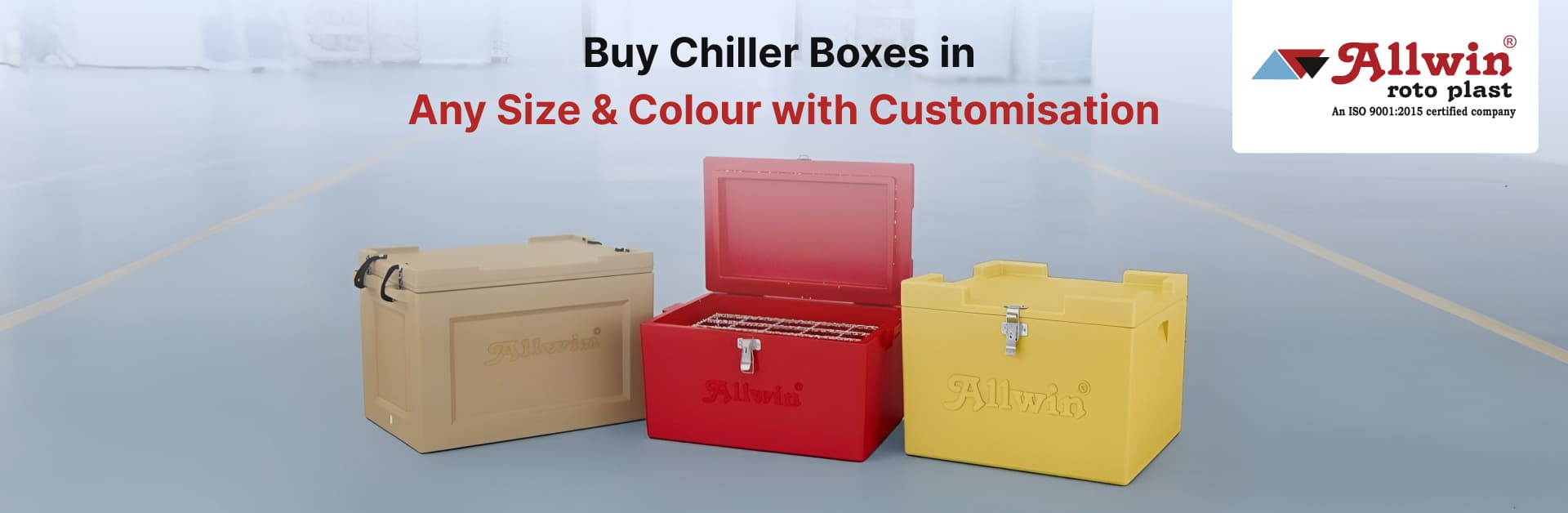
Any custom chiller cooler box is available in any colour or size to enable maximum flexibility.
Selecting the proper materials will directly influence your chiller’s product durability, sanitation, and thermal (insulation) capabilities. Quality chillers should be produced from polymers that are Health Canada-approved and food-grade; these polymers are specifically engineered to provide repeated use, repeated cleaning, and resistance to the environment.
The high level of use of high-density polyethylene is due to its properties of high impact resistance and chemical stability, along with the chemical stability of the material, which provides for compatibility with food contact.
Insulation materials are selected to provide consistent thermal resistance to keep weight down and increase efficiency.
Important material considerations include:
Food-grade insulated cooler boxes are guaranteed to keep your food safe and provide a long life.
See Details: The Best Ice Box Coolers for Every Budget and Need
The benefits of custom chiller boxes go beyond the original storage function. By matching the design of the cooler box to the conditions in which it will be used, businesses are able to eliminate inefficiencies and provide a more consistent temperature over time. With lower product loss, operations run more smoothly.
Solutions created specifically for a given application improve the ergonomics of handling the product and create a consistent look and feel for users across different teams and locations. This is especially important for companies that work in a commercial space where presentation matters just as much as reliability.
The primary benefit of custom chiller cooler box solutions is:
In addition to being more ergonomic and consistent, custom chiller cooler boxes are also designed for heavy-duty use.
Learn More: How Insulated Ice Boxes Benefit Various Industries
To choose a chiller box adequately, one must consider the mode of operation and not solely rely on product specifications, and as such, should think about their daily operation, and not just ideal operating environments.
When considering factors such as the handling and frequency of handling, the length of time the unit will be used to transport goods, the frequency and method of cleaning, the frequency of regulatory inspections, etc., it is important to seek advice from an experienced supplier to ensure that the correct specification is selected.
Choosing an insulated chiller box for food storage:
By carefully considering the above five criteria, the insulated chiller box selected for food storage and transportation will have the necessary characteristics to perform reliably during these functions.
When battery boxes are being used in regulated areas, it is important to maintain quality standards. All companies within the supply chain must meet quality standards in order to provide assurance for their products regarding their safety and consistency. Contaminated products can create a risk to customers as well as create operating delays and interruptions for vendors.
Chiller box manufacturers that are reliable will implement processes that are proven methods through Quality control Points in Production, which include verification of Materials, Structural Tests on Boxes, and Insulation Testing for Performance. Here are some of the key compliance factors:
Reducing risk by choosing a reliable chiller ice box manufacturing company for cold storage units can help protect you as a customer.
Like all chiller boxes, these require maintenance and care for long-term performance. Regular cleaning and right usage will help prevent damage to the product and maintain sanitary conditions within the box. With a few simple practices, you can significantly increase the length of time that your chiller box performs effectively.
In order to maintain consistent cooling performance and to ensure safety, consider implementing maintenance as a part of your daily operations instead of an afterthought.
Some examples of maintenance best practices are:
With continued proper maintenance and upkeep of your ice cooler box units, these will be reliable units for the long term.
Bulk sourcing and custom manufacturing offer cost efficiency and consistency for businesses with ongoing demand. Planning helps align production schedules with operational timelines.
There are different types of lead times that may vary based on the number of units ordered and the complexity of customization. Therefore, it is recommended to engage manufacturers as early as possible to minimize delays from seasonal peaks in demand.
The following factors contribute to the advantages of bulk sourcing:
When partnering with a bulk fish tubs and insulated ice boxes supplier, it is especially important to take advantage of these factors.
Once requirements are clearly articulated, making a strategic choice about who to partner with is an important process for selecting the appropriate manufacturer. It is more important to consider the long-term value, based on experience, process control, and the ability to customize, than it is to focus on short-term pricing.
Allwin Roto Plast has been established to be the 'go to' manufacturing source of Chiller Ice Boxes for Commercial and Industrial Applications, producing quality, customizable products. They are committed to providing high-quality materials, optimal insulation performance, and the ability to scale manufacturing to support their customers' needs as they grow.

Across industries, Chillers are some of the most important assets used to preserve the temperature of your product. All decisions, from the size & style of material to how and what you want them designed, along with vendor reliability, will affect the performance and efficiency of the Chiller box.
Business that understand these factors will be able to invest in a trusted supplier who can give them an appropriate Chiller Box that offers consistent cooling, flexibility when using the box, and value over time.