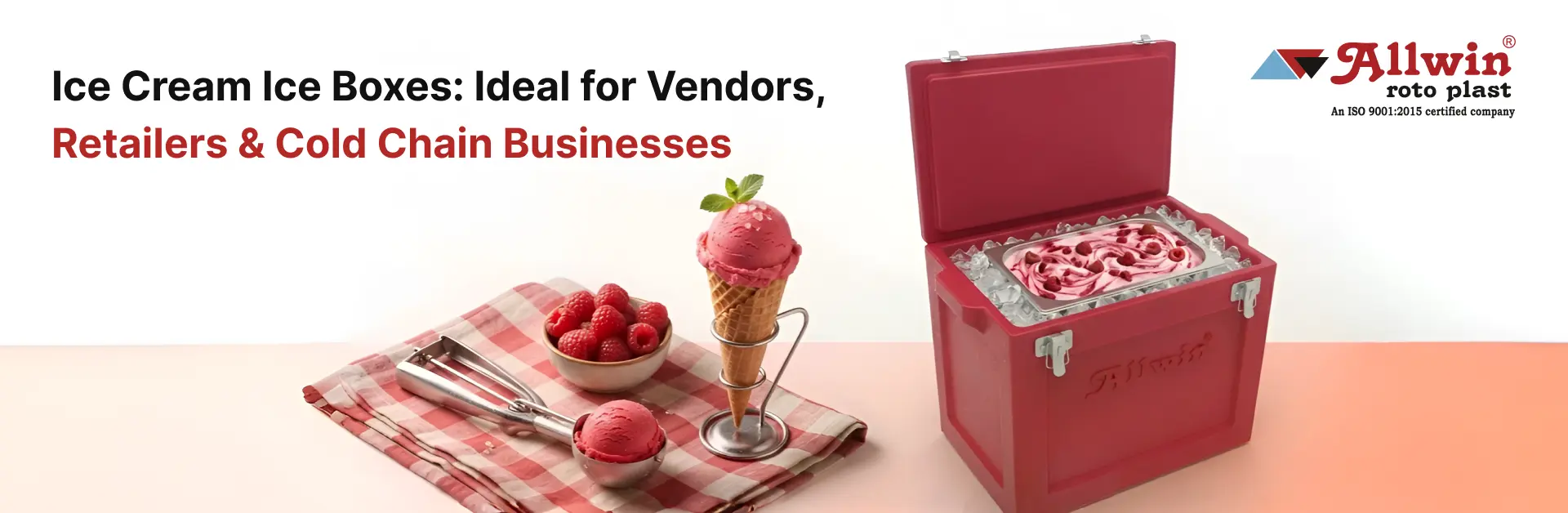
An ice box isn't just something you dump stock into and forget about until you need it again. Honestly, it's the whole gap between a full day of good sales and a box full of melted product by afternoon. Different kinds of businesses feel this pressure in their own way:
- Street vendors need a box that can hold ice for six to seven hours straight in direct sun, without leaking or turning to slush halfway through the day.
- Retailers need something that keeps stock cold through an entire business day, getting opened and closed again and again as customers come and go.
- Cold chain businesses need boxes that can survive loading, hours on the road, and repeated opening, all without losing their cooling power somewhere along the way.
Get the box wrong, and you end up losing more than just the product sitting inside it. You lose the money already spent on that stock. You lose a customer who walked away unhappy. And little by little, you lose some trust too, since a business that can't keep its ice cream properly cold doesn't build much confidence with regulars. On top of all that, cheap boxes tend to need replacing far more often than people plan for going in. What looks like a decent saving on day one usually ends up costing more once you tally it up over a full year.
What Is a Roto-Moulded Ice Cream Ice Box?
A roto-moulded ice box is a heavy-duty insulated container. It keeps ice and frozen goods like ice cream solid for long hours. It is made through rotational moulding. That process forms a seamless, one-piece plastic shell. The shell resists impact and daily wear.
The process is simple. Plastic powder goes into a hollow mould. The mould spins slowly inside a heated chamber. The plastic melts as it turns. It coats the inside evenly, layer by layer. What comes out is one solid shell. No joints anywhere.
That matters more than it sounds. Cheaper boxes are built from separate pieces. Those pieces are glued or welded together. The joints are where cracks start. A drop or two. A few weeks of dragging across rough ground. Then the box starts to fail. A proper Plastic Ice cream ice Boxes manufacturing company uses roto-moulding. Their boxes take years of that treatment.
The insulation does the cooling work. A good Insulated Ice Cream Box has an insulation layer built into the walls. It holds cold air in. It keeps outside heat out. That is why ice lasts far longer in a well-made box. Two boxes can look similar side by side and perform very differently.
Key Features to Look for in an Ice Cream Ice Box
Not all insulated boxes on the market are built to the same standard, not even close. A handful of features actually make a real difference once you're using one every single day, in real working conditions rather than just sitting on a shelf:
- Strong insulation: thicker insulation keeps ice and stock frozen for longer, even sitting in direct sun for hours at a stretch.
- Leak-proof design: a decent box shouldn't let melted water pool inside or drip out onto your cart, counter, or floor while you're busy serving customers.
- Light but sturdy build: Light Weight Insulated Ice Boxes cut down on physical strain without giving up strength, which genuinely matters if you're lifting the same box multiple times a day.
- Tough, crack-resistant material: boxes get dropped, bumped, and dragged around constantly in daily use, and a roto-moulded shell handles this far better than thin, brittle plastic ever could.
- Easy to clean: a smooth, non-porous interior that wipes down quickly matters a great deal in food handling, where hygiene isn't something you can compromise on.
- A good-looking finish: premium insulated ice boxes with a clean, branded look add a bit of professionalism if the box sits right in front of customers at a counter or a stall.
See Also: Ice Box Price Guide: What Commercial Buyers Need to Know
Types of Ice Cream Boxes
Not every ice cream box is built for the same job, and picking the right type early on saves a fair amount of trouble later on:
- Vendor carry boxes: compact and light, built specifically for carts and daily street selling, where easy carrying matters just as much as insulation.
- Retail storage boxes: come in larger sizes, meant to sit behind a counter or inside a shop, holding stock steady through a full day of business.
- Distribution and cold chain boxes: the heavy-duty option, built to survive transport, loading docks, and constant opening and closing between locations.
- Ice Cream & Beverage Ice Box: some units are dual-purpose, handling both ice cream and cold drinks at once, genuinely useful for vendors or small shopkeepers selling both from the same stall without carrying two separate boxes.
Best Ice Cream Ice Boxes for Different Industries
What actually counts as "the best box" depends a lot on how you use it day to day, since different businesses put very different demands on what is basically the same product:
- Street vendors generally need something light enough to carry or mount on a cart, paired with insulation strong enough to survive hours of direct sun without the ice giving out too early.
- Ice cream parlours and retail shops usually need bigger, sturdier boxes that hold stock steady through a full business day, without someone having to top up ice every hour or two.
- Distributors and cold chain businesses need something built specifically for repeated transport, where cooling power simply can't be allowed to drop over multiple trips.
- Event and catering businesses tend to sit somewhere in between, usually needing mid-sized, easily portable boxes that handle a few hours of continuous serving without losing their cool partway through.
Ice Cream Ice Box vs Traditional Thermocol/Cooler Boxes
Thermocol boxes are cheap and available pretty much everywhere, which is exactly why so many small vendors start out with them. It makes sense at first glance. But the downsides tend to show up fast once you're actually relying on one every day.
Thermocol boxes tend to:
- Crack easily under regular handling
- Crumble and wear down within just a few weeks or a couple of months
- Offer noticeably weaker insulation, so ice melts faster
- Need frequent replacement, which adds up in cost more than people expect
Read More: Ice Box: A Cool Solution for Food Storage
A proper roto-moulded Insulated Ice Cream Box, on the other hand, tends to:
- Hold up for years rather than weeks
- Keep ice frozen for noticeably longer stretches
- Survive daily wear that thermocol simply can't handle
- Cost more upfront, but usually pay for itself over time through less spoiled stock and fewer repeat purchases
Choosing the Optimal Size for Ice Cream Boxes in Plastic
Picking the right size really comes down to how much stock you sell each day and exactly how you plan to use the box:
- An Ice Cream Ice Boxes - 50 Litre option is usually plenty for smaller vendors or single-cart operations, without being so bulky it becomes a pain to carry or mount.
- An Ice Box - 100 Litre size works better for retailers, parlours, or higher-volume vendors who don't want to restock too often or who deal with heavier foot traffic regularly.
As for ice box price, it typically scales along with size, insulation thickness, and overall build quality. A basic 50 litre box will naturally cost less than a heavy-duty 100 litre unit built specifically for cold chain transport. It helps to be honest with yourself about how much stock you actually sell daily before settling on a size, since a box that's too small can cost you in lost sales, while one that's too large just wastes both space and money you didn't need to spend.
See More: India’s Leading Insulated Box Manufacturing & Supplying Company – Quality You Can Trust
Tips to Maintain & Extend the Life of Your Ice Boxes
A good ice box can genuinely last for years, but only if it's looked after properly along the way, and this really doesn't take much effort:
- Clean it regularly with mild soap and water, steering clear of harsh chemicals that can wear down the interior lining faster than normal use would.
- Let it dry out fully before closing the lid each time, since trapped moisture inside can quietly affect insulation and lead to bad smells building up over time.
- Try to avoid dragging or dropping the box unnecessarily, since small cracks from careless handling tend to get worse the longer they're left alone.
- Keep it away from direct, prolonged sun exposure when it isn't in use, since months of exposure can slowly weaken the plastic even if it doesn't show right away.
- Check the lid seal every so often, since a loose or worn seal is usually the first real sign that insulation is starting to lose its edge.
Benefits of Choosing Allwin Rotoplast Ice Boxes
If you're on the hunt for a dependable ice cream box manufacturer, Allwin Rotoplast has been building roto-moulded insulated products for years now, working out of Ahmedabad, Gujarat.
- Our Plastic Ice Boxes are designed specifically around the problems vendors, retailers, and cold chain businesses actually run into on a daily basis.
- We manufacture across a full size range, so whether you need something compact for a single cart or a large-capacity unit for full-scale distribution, there's a configuration that fits.
- Every box goes through consistent quality checks throughout production, not just a quick look-over at the very end.
- We support bulk orders for businesses that are actively scaling up and need reliable, repeat supply they can count on.