
2026-07-09
“That's really why Plastic vs. Wood deserves more than a quick guess.”
So when you're choosing between plastic pallets vs wood pallets, don't just chase the lower price. Ask yourself something simpler first: how do you actually move your goods? Sending something out just once, no need for it back? Wood's probably fine. Running a food business, a pharma company, cold storage, or a busy warehouse? Plastic usually wins. And depending on what you handle, you might need something specific, like spill containment pallets, plastic spill pallets, or Roto Molded Plastic Pallets.
Here's a plain breakdown of Wood and plastic pallets, so you can figure out what actually works for you
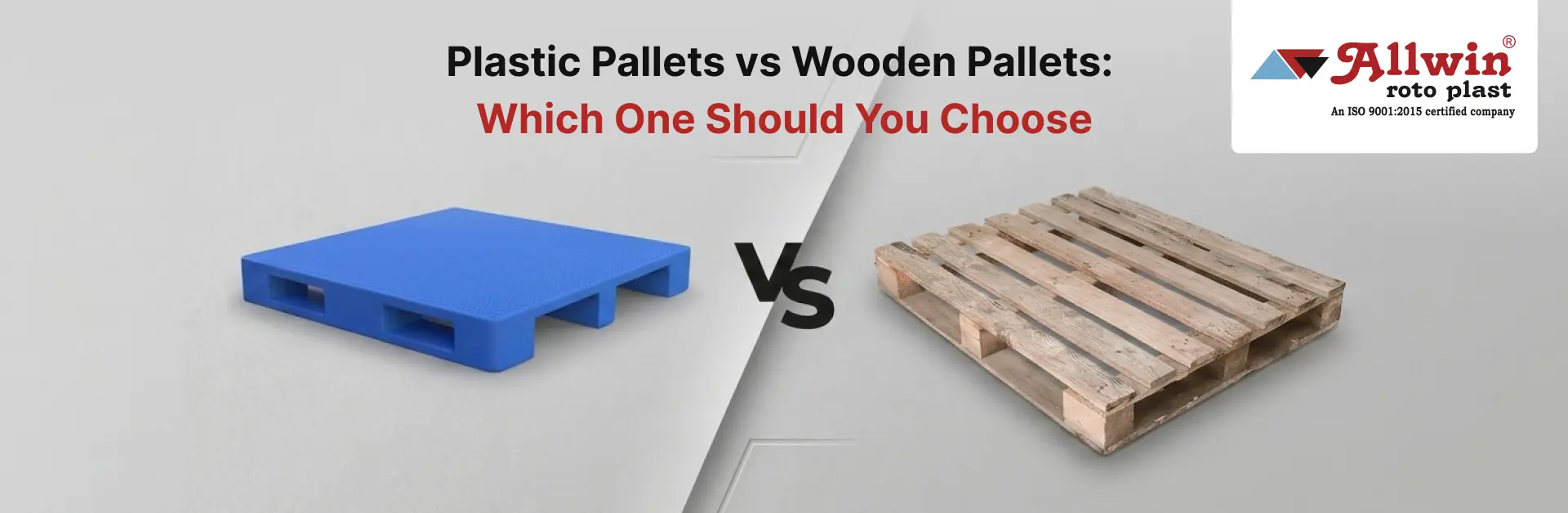
Plastic pallets are flat transport platforms made from tough plastic. Businesses use them to store, stack, and move goods. You'll spot them in warehouses, factories, cold storage units, food plants, and pharma companies.
There's a decent range too. Some suit normal warehouse work. Some carry heavy loads. Some are built for drums and liquids. Some exist just for spill control. Which one fits depends on what you're carrying and where it's going.
Wooden pallets are made from wood boards, blocks, and nails. Still common, mostly because they're cheap, easy to find, and every warehouse worker already knows how to use one.
For a lot of businesses, that's plenty. Goods going out once, not coming back? Wood does the job fine. Board breaks? Usually a five-minute fix with basic tools, nothing fancy needed.
Wood isn't a bad option at all. It just suits a different kind of job than plastic does.
The real gap between wood and plastic pallets shows up once you actually start using them, not on the price tag at the counter. Wood might look cheaper on day one. But if it keeps breaking or soaking up water, that early saving vanishes fast.
Plastic costs more when you buy it. But in warehouses and cold storage, where pallets get used again and again, it often saves you money later, simply by causing fewer problems.
When people bring up the load capacities of wooden vs plastic pallets, there's no single answer that covers every case. It comes down to how the pallet's built, what it's made of, and how you're loading it. A standing load, a moving load, and a rack load aren't the same thing. So don't judge a pallet by its size alone. That's a common trap.
| Factor | Plastic Pallets | Wooden Pallets |
|---|---|---|
| Cost to buy | Usually higher | Usually lower |
| Cleanliness | Easy to clean | Can hold dust, smell, water |
| Water resistance | Good in wet or cold spots | Soaks up water |
| Splinters/nails | None | Can happen |
| Reuse | Good for repeated use | Depends on wood quality |
| Repair | Limited | Easy |
| Size | Stays the same | Can shift after repairs |
| Custom options | Colour, branding possible | Limited |
| Best for | Clean, wet, repeated use | One-time, low-cost jobs |
Learn More: Why Plastic Pallets Are the Best Choice for Export Packaging and International Shipping
Plastic pulls ahead wherever cleanliness, water, and heavy reuse are part of the daily grind. These happen to be exactly the spots where wood tends to fall short.
Food and pharma businesses can't afford splinters or dust near their products. Seafood and cold storage deal with water constantly. Chemical storage needs more than an ordinary pallet if there's any risk of a leak, which is where 3 runner, 4 way entry pallets or 9 legs 4-way entry pallets step in.
A lot of folks searching for the best plastic pallets aren't chasing an upgrade for the sake of it. They just want fewer problems showing up week after week.
Wood still earns its place plenty of times. One-off shipment, nothing coming back? Wood's often the smarter buy. It also suits businesses where cleanliness isn't a priority and keeping costs low actually counts for something.
Repairs matter too. For a lot of operations, fixing a pallet quickly on the spot beats holding onto it for years.
None of this means plastic wins every single time. It just means picking whatever actually fits the job in front of you.
For bulk buyers, the price on the invoice is only part of the story. Wood may look cheaper at first glance. But if it keeps breaking, that saving disappears fast. Plastic costs more to start, but it usually stays useful for a lot longer.
This matters most for warehouses, cold storage, factories, food plants, and pharma companies.
| Comparison Point | Plastic Pallets | Wooden Pallets |
|---|---|---|
| Cost to buy | Higher | Lower |
| Long-term value | Better for repeated use | Better for one-time use |
| Cleanliness | Easy to clean | Can collect dust, smell, water |
| Water resistance | Good in wet or cold areas | Soaks up water |
| Chance of breaking | Lower if chosen right | Higher with poor wood quality |
| Repair | Limited | Easy |
| Export use | No wood treatment needed | May need treatment |
| Custom options | Easy for colour, branding | Limited |
| Best for | Repeated use, food, pharma, cold storage, chemicals | One-time use, basic storage |
For bulk orders, skip the habit of looking at just one pallet's price. Think about how long it'll actually stay useful in your setup.
See Also: 2 Way vs 4 Way Plastic Pallets: Key Differences Explained
Plenty of businesses are moving from wood to plastic simply because their operations have gotten more organised over the years. Warehouses run cleaner now. Cold storage use keeps growing. Export rules keep tightening. Hygiene expectations only climb. In that kind of setup, a pallet needs to do more than just carry weight.
Wood can still handle the job, sure. But it brings problems that keep repeating. Boards crack. Nails work loose. Pallets soak up water. Repaired ones end up uneven. None of it looks huge on its own, but it slows things down over time.
Plastic pallets do the most good for industries where pallets get reused, washed, or exposed to water often, and where clean, uniform handling actually matters.
For these businesses, the pallet stops being just something goods sit on. It becomes part of how the whole operation actually runs.
Before you place a bulk order, get clear on how the pallet will actually be used. Most mistakes happen when people pick a pallet on price or size alone, without thinking the job through properly.
A pallet built for boxes might not hold up under drums. One meant for floor storage might not suit racking. And a pallet that's fine in a dry warehouse could act completely differently in cold storage.
A good pallet choice starts with what you'll actually use it for, not just the price tag.
Looking for double wall spill pallets in India? The supplier matters just as much as the product itself. A good one understands your load, your handling needs, and helps you land on the right pallet, not just sell whatever's sitting in stock.
Allwin Roto Plast, based in Ahmedabad, makes roto-moulded industrial products, including a wide range of plastic pallets. That makes it worth a look if you're after plastic pallets manufacturer in India, or an Industrial Plastic Pallets Manufacturer.
The pallet range covers warehousing, logistics, food, pharma, automotive, chemical handling, and spill control. If you want pallets that are clean, safe, and built to last, this range covers most of what you'd need.